
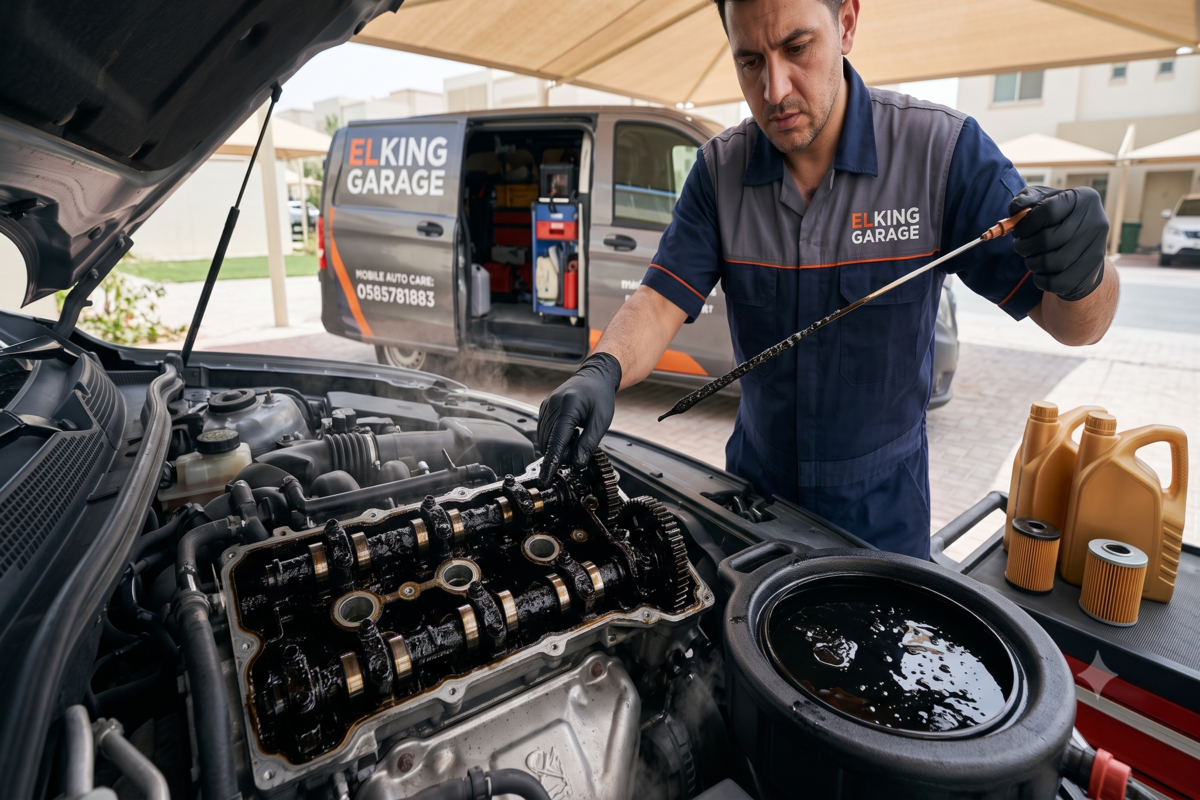
Engine oil is the absolute lifeblood of your vehicle, keeping intricate internal components lubricated, cool, and operating smoothly. However, oil degrades and accumulates debris over time. Ignoring the warning signs that your oil has reached the end of its lifespan can transform a routine, inexpensive maintenance task into a total financial nightmare.
Telltale Signs It’s Time for a Change
- Dark, Gritty Texture: Fresh motor oil is translucent and amber-colored. If checking your dipstick reveals thick, pitch-black, or gritty oil, it is saturated with contaminants and can no longer protect your engine.
- Loud Engine Noise: When oil thins out or degrades, it loses its ability to cushion moving parts. You will likely hear metallic ticking, knocking, or grinding sounds under the hood as components clash.
- Exhaust Smoke: While translucent vapor is normal, dark or blue smoke billowing from your exhaust pipe usually points to an internal oil leak or burning oil.
The Costly Consequences of Neglect
Skipping your scheduled oil change creates a dangerous domino effect inside your engine block. Initially, your fuel efficiency will plummet because the engine has to work twice as hard to overcome internal resistance.
As the dirty oil continues to circulate, it breaks down further and transforms into a thick, black, jelly-like sludge. This sludge clogs vital oil passages, starving the engine of what little lubrication it has left.
The Ultimate Risk: Without proper lubrication, intense friction generates extreme thermal stress. This inevitably causes the engine to overheat, warp internal components, or completely seize up. A seized engine is a catastrophic mechanical failure that usually requires a total, incredibly expensive engine replacement.
Don’t wait for the dashboard warning light to scream for help—checking and changing your oil on time is the easiest way to guarantee a long, healthy life for your car.